
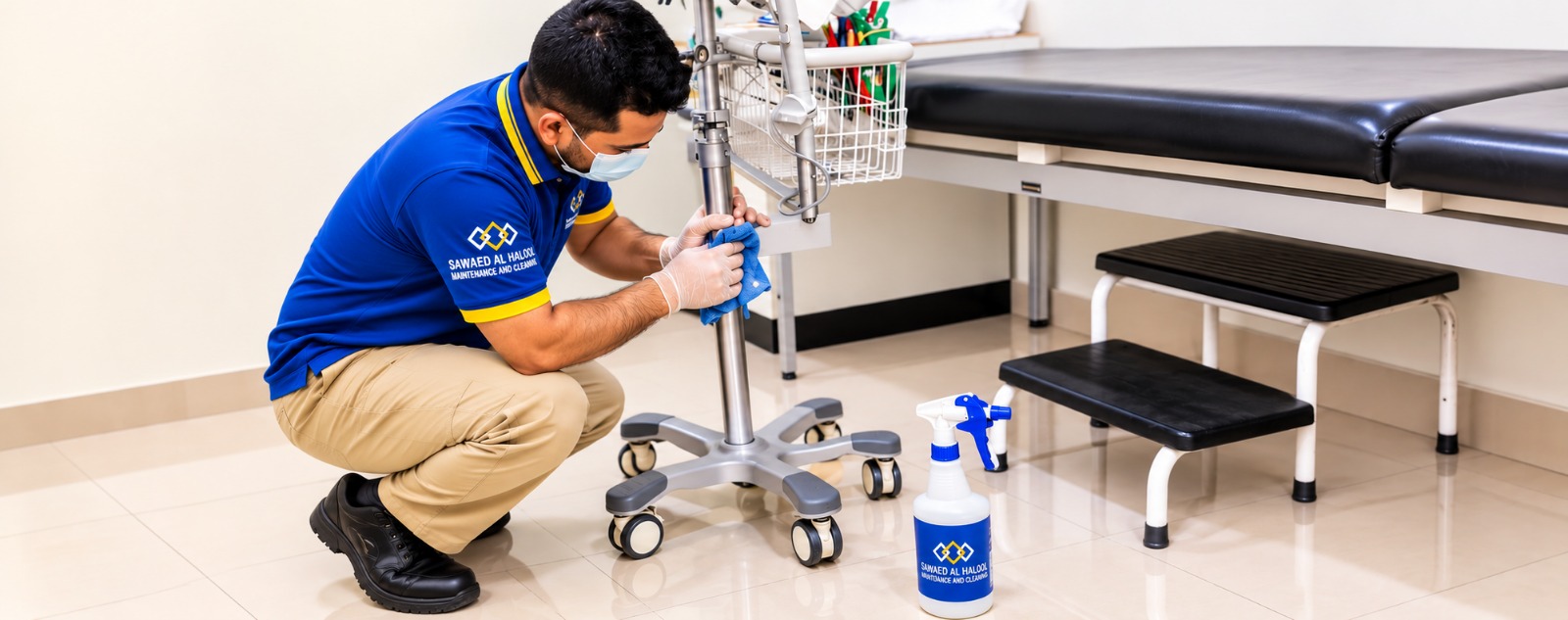
What Is a Hospital Deep Cleaning?
Hospitals and healthcare facilities need a higher level of cleaning than many ordinary commercial environments. Patients, healthcare workers, visitors and medical equipment share spaces where cleanliness plays an important role in infection prevention and patient safety.
Hospital deep cleaning involves thorough cleaning of areas, surfaces and equipment that may not receive the same level of attention during routine daily cleaning. Depending on the facility and area, this may include patient rooms, treatment areas, waiting areas, bathrooms, floors, high-touch surfaces and other environmental areas.
Deep cleaning should not replace routine cleaning. Instead, it should form part of a broader environmental cleaning programme based on the needs and risks of each area.
The CDC recommends healthcare facilities use setting-specific cleaning and disinfection protocols and pay particular attention to surfaces with frequent hand contact.
Why Is Hospital Deep Cleaning Important?
Healthcare environments can contain different types of microorganisms and levels of contamination. The risk can also vary between areas depending on patient vulnerability, activity levels and the amount of contact with surfaces.
A well-planned cleaning programme can help:
- Maintain hygienic patient care areas
- Reduce microbial contamination on environmental surfaces
- Support infection prevention and control practices
- Keep high-touch areas properly maintained
- Improve the overall condition of healthcare facilities
- Provide a cleaner environment for patients, visitors and staff
The World Health Organization identifies environmental cleaning as an important part of infection prevention and control in healthcare settings.
When Does a Healthcare Facility Need Deep Cleaning?
There is no single schedule that applies to every hospital or healthcare facility. Cleaning frequency should reflect the type of area, level of use, patient population and potential exposure to contamination.
1. After Patient Discharge or Transfer
A patient room may require more thorough cleaning after a patient leaves, particularly before the room is prepared for another patient.
This is commonly referred to as terminal cleaning or discharge/transfer cleaning. The CDC describes terminal cleaning as cleaning and disinfection carried out after a patient has been discharged or transferred, to reduce microbial contamination.
2. After Contamination or Spills
Blood, body fluids and other potentially contaminated materials require prompt attention.
Healthcare facilities should have procedures for dealing with spills and contaminated surfaces, including appropriate cleaning products, protective equipment and disposal methods.
3. During Outbreaks or Increased Infection Risk
When a healthcare facility is dealing with an infectious disease outbreak or an increased infection-control concern, cleaning and disinfection procedures may need to be adjusted.
The appropriate response depends on the situation and should follow the facility’s infection prevention and control policies and applicable guidance.
4. In High-Touch Areas
Some surfaces are touched far more frequently than others.
Examples include:
- Bed rails
- Door handles
- Light switches
- Faucet handles
- Bedside tables
- Frequently touched equipment surfaces
- Shared workstations and other frequently handled items
The CDC recommends that high-touch surfaces receive more frequent cleaning and disinfection than surfaces with minimal hand contact.
5. When Routine Cleaning Is Not Enough
Regular cleaning should form the foundation of a healthcare facility’s hygiene programme. However, some areas may need additional attention because of accumulated soil, changes in use, maintenance work or specific facility requirements.
A deep cleaning programme can address areas that need more detailed attention while routine cleaning continues as normal.
What Is Healthcare Facility Disinfection?
Healthcare facility disinfection is the process of using appropriate methods and products to reduce or eliminate microorganisms on suitable environmental surfaces.
It is important to understand that cleaning and disinfection are not exactly the same.
Cleaning removes dirt, organic matter and other material from a surface. This physical removal is an important first step because organic material can interfere with the effectiveness of disinfection.
Disinfection uses an appropriate disinfecting agent or process to inactivate microorganisms on a suitable surface.
The CDC notes that cleaning is necessary before disinfection because soil and organic material can interfere with microbial inactivation.
This is why simply applying a disinfectant to a visibly dirty surface is not an appropriate substitute for proper cleaning.
Hospital Cleaning Requires More Than a Generic Checklist
Healthcare facilities contain different environments, and each one can have different cleaning requirements.
For example, the cleaning approach for a patient room may differ from that used in:
- Operating areas
- Emergency departments
- Intensive care areas
- Examination rooms
- Waiting areas
- Staff areas
- Bathrooms
- Administrative offices
The CDC recommends setting-specific cleaning and disinfection protocols, including routine and discharge/transfer procedures for different types of patient care areas.
A professional programme should therefore consider the function of each area rather than applying exactly the same process throughout the entire facility.
What Should a Hospital Deep Cleaning Programme Include?
A strong programme should be based on written procedures, appropriate products and trained personnel.
Key elements can include:
Risk-Based Cleaning Schedules
Cleaning frequency should reflect factors such as patient vulnerability, hand-contact frequency and potential exposure to pathogens.
High-Touch Surface Management
Frequently touched surfaces should receive appropriate attention because they can be repeatedly contacted by staff, patients and visitors.
Appropriate Cleaning Products
Products should be selected according to the surface, intended use and facility requirements. Manufacturer instructions, including dilution and contact time, should be followed.
Proper Staff Training
People responsible for environmental cleaning need to understand the correct cleaning methods, product use, personal protective equipment and facility-specific procedures.
Monitoring and Quality Checks
Cleaning programmes should not simply be implemented and forgotten. Healthcare facilities benefit from monitoring whether procedures are being followed and whether the required level of cleanliness is being achieved.
The CDC identifies training, standardised protocols, monitoring and feedback as important components of an effective environmental cleaning programme.
How Often Should Hospitals Be Deep Cleaned?
The answer depends on the area and the facility’s risk assessment.
Routine cleaning may take place daily or more frequently in high-use areas, while deeper or terminal cleaning may be triggered by specific events such as patient discharge, contamination or changes in infection-control requirements.
There is no universal rule that every hospital should receive a complete deep clean at a fixed interval.
Instead, healthcare facilities should develop written cleaning schedules that specify the responsible personnel, frequency, methods and products for different areas.
This approach makes the cleaning programme more practical and better suited to the actual facility.
Hospital Deep Cleaning vs Routine Cleaning
These two approaches work together rather than replacing one another.
| Routine Cleaning | Deep Cleaning |
|---|---|
| Performed regularly | Performed when additional attention is required |
| Maintains everyday cleanliness | Addresses more detailed cleaning needs |
| Focuses on regular tasks and surfaces | Can include less frequently addressed areas |
| Supports ongoing hygiene | Supports periodic or event-based cleaning requirements |
| Part of everyday facility operations | Usually requires additional planning |
The exact scope should always be determined by the healthcare facility’s own policies, risk assessment and infection prevention requirements.
Why Professional Healthcare Cleaning Matters
Healthcare cleaning requires more than making an environment look clean.
The WHO notes that people responsible for environmental cleaning play an important role in infection prevention, while effective cleaning depends on appropriate practices, training and standardised techniques.
A professional cleaning provider can support healthcare facilities by helping establish structured cleaning processes, trained teams and consistent service standards.
For example, Sawaed Al Halool states that it provides advanced cleaning and sterilisation solutions to hospitals and other facilities across Saudi Arabia. The company also highlights professional training, quality systems and cleaning technologies as part of its approach.
Choosing a Healthcare Cleaning Provider
When comparing healthcare cleaning companies, facilities should look beyond price alone.
Consider whether the provider can:
- Understand the requirements of healthcare environments.
- Develop cleaning processes around different facility areas.
- Train personnel in appropriate cleaning procedures.
- Address high-touch surfaces effectively.
- Follow documented cleaning and disinfection protocols.
- Use suitable products according to manufacturer instructions.
- Monitor service quality and identify areas for improvement.
- Adapt cleaning schedules when facility requirements change.
Sawaed Al Halool says its services include periodic inspection visits, customer satisfaction evaluation and continuous improvement plans, alongside its facility management services.
A Cleaner Approach to Healthcare Facility Management
Hospital cleaning is not a single task performed at the end of the day. It is an ongoing process involving routine cleaning, targeted disinfection, deep cleaning, staff training, monitoring and clear responsibilities.
When these elements work together, healthcare facilities can maintain cleaner and safer environments while supporting their wider infection prevention and control efforts.
For hospitals and healthcare organisations in Saudi Arabia, choosing a cleaning partner with healthcare-focused processes can make it easier to maintain consistent standards across different areas of the facility.
Final Thoughts
Hospital deep cleaning is an important part of maintaining healthcare environments, but it works best as one component of a broader cleaning and infection-control programme.
Routine cleaning, high-touch surface management, terminal cleaning, appropriate disinfection and trained personnel all have a role to play.
Most importantly, cleaning schedules should be based on the type of healthcare environment, patient needs, surface contact and potential contamination rather than relying on a one-size-fits-all approach.
Need Professional Healthcare Cleaning Support?
Sawaed Al Halool provides professional cleaning and sterilisation solutions for hospitals and other facilities across Saudi Arabia, with an approach that combines trained teams, quality standards and modern cleaning technologies.
Request a Free Cleaning Quote →
Frequently Asked Questions
What is hospital deep cleaning?
Hospital deep cleaning is a more thorough cleaning process used to address areas and surfaces that require additional attention beyond routine cleaning. Its scope and frequency depend on the type of healthcare area and facility requirements.
How often should a hospital be deep cleaned?
There is no single schedule for every hospital. Cleaning frequency should be based on the area, patient population, level of use, contamination risk and the facility’s cleaning protocols.
What is healthcare facility disinfection?
Healthcare facility disinfection involves using appropriate processes and products to reduce or eliminate microorganisms on suitable environmental surfaces. Proper cleaning should generally take place before disinfection.
What areas require frequent cleaning in hospitals?
High-touch areas such as bed rails, door handles, light switches and faucet handles generally require more frequent attention than surfaces with minimal hand contact.
Is deep cleaning the same as disinfection?
No. Cleaning removes dirt and organic material, while disinfection uses an appropriate disinfecting process to inactivate microorganisms. Both can form part of a healthcare facility’s environmental hygiene programme.
Why is terminal cleaning important?
Terminal cleaning takes place after a patient has been discharged or transferred. It helps remove organic material and reduce microbial contamination before the area is prepared for the next patient.
Can professional cleaning companies clean hospitals?
Yes. Healthcare facilities can use dedicated environmental services teams or external cleaning providers. Any provider should be able to follow the facility’s cleaning, safety and infection-control requirements.
Does Sawaed Al Halool provide hospital cleaning services?
Yes. Sawaed Al Halool states that it provides cleaning and sterilisation solutions to hospitals and other facilities across Saudi Arabia.